
Artificial intelligence isn’t creeping into the workplace—it’s sprinting. From chatbots writing copy to robots stacking shelves, jobs once thought secure are being handed to machines at record speed. It’s no wonder students and workers everywhere are asking the same anxious question: which careers will still matter in ten or twenty years? One answer comes from a man who has been at the center of every major tech wave of the past half-century. Bill Gates shares 3 jobs AI won’t replace. They are not necessarily glamorous or the most lucrative, but they are deeply, stubbornly human.
Why Gates Still Trusts Human Skills

Gates has never been a doomsayer when it comes to technology. He knows better than most that innovation creates new opportunities as quickly as it closes old doors. Still, he also knows that certain human abilities are extraordinarily difficult to replicate. Machines are fast, logical, and tireless. But can they comfort a grieving patient? Or inspire a teenager who thinks they’re destined to fail? Or design a building that feels alive instead of sterile?
That’s the essence of Gates’s case. When he refers to the three professions that everyone should pursue to not be displaced by artificial intelligence, he is not foretelling a robotless future. In the scenario he is painting, computers handle the repetitive work and humans concentrate on the work that needs imagination, compassion, and leadership.
The Irreplaceable Spark of Creativity
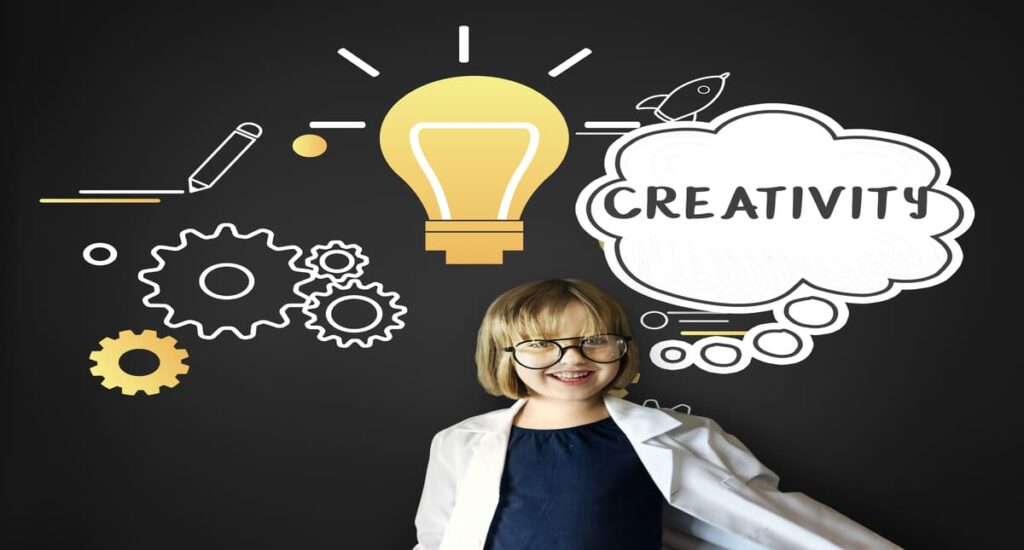
Let’s begin with creativity. If you’ve ever looked at AI-created paintings or heard a computer-generated song, you likely were awed and unsettled. Yes, the machine can imitate styles and mix patterns, but there’s always something lacking. It’s smart, but it’s not human. Gates feels that’s why creative jobs will continue to be one of the surest bets.
A novelist who weaves a tale out of private sorrow, an architect who constructs a library that is a refuge, a fashion designer who embodies the spirit of an entire generation—these are human acts of translation, not technical proficiency. They are born of experience, cultural knowledge, and that elusive quality we term vision. AI can produce. Can someone envision it? That’s the distinction, and that’s why the arts will always belong to us.
Healthcare: Where Empathy is Medicine

Now picture a doctor’s office. A patient sits nervously, waiting to hear test results. An algorithm could deliver the news with perfect accuracy, but would that be enough? Gates doesn’t think so. He points to healthcare as one of the three careers to study to avoid being replaced by artificial intelligence precisely because of moments like this.
The roles of doctors, nurses, and therapists extend beyond administering medication and conducting tests. When terror takes hold, they are present throughout the silent, somber times. If you’ve ever waited in a hospital with someone you love, you know what matters most. It’s not the machines or the charts. It’s the steady hand that doesn’t let go, the calm voice reminding you that you’re not alone. Technology is getting smarter, no doubt. But it can’t replace that kind of presence. Honestly, the more AI shows up in hospitals, the more obvious it becomes that compassion is the part of care we’ll always need most.
Education: The Human Power to Inspire

Last but not least is education. Gates has invested decades in funding schools and educational initiatives, so it comes as no surprise that he views teachers as indispensable. A computer can test you, score your multiple choice, or even tutor you through algebra. But what it can’t do is see the slumping shoulders of an invisible child in class—or ignite the kind of wonder that makes learning become enchanting.
Everyone may recall that one instructor who made a huge difference. Perhaps they brought a subject to life with their passion, or perhaps they supported you while others questioned you. That’s the power of teaching. It’s not about information delivery—that’s the easy part now. It’s about connection. That’s why education will remain one of the three careers to study to avoid being replaced by artificial intelligence, according to Bill Gates.
What These Careers Teach Us About Ourselves

It’s striking that Gates didn’t choose careers like programming or engineering as the safest from AI. In fact, those fields may be among the most disrupted. Instead, he singled out creativity, healthcare, and education—three areas where human relationships and imagination are at the core. Notice the pattern. Each of these careers is about people first, tasks second. An artist creates meaning. A doctor heals with empathy. A teacher inspires growth. Machines can help, but they cannot be that.
A Future With AI, Not Against It
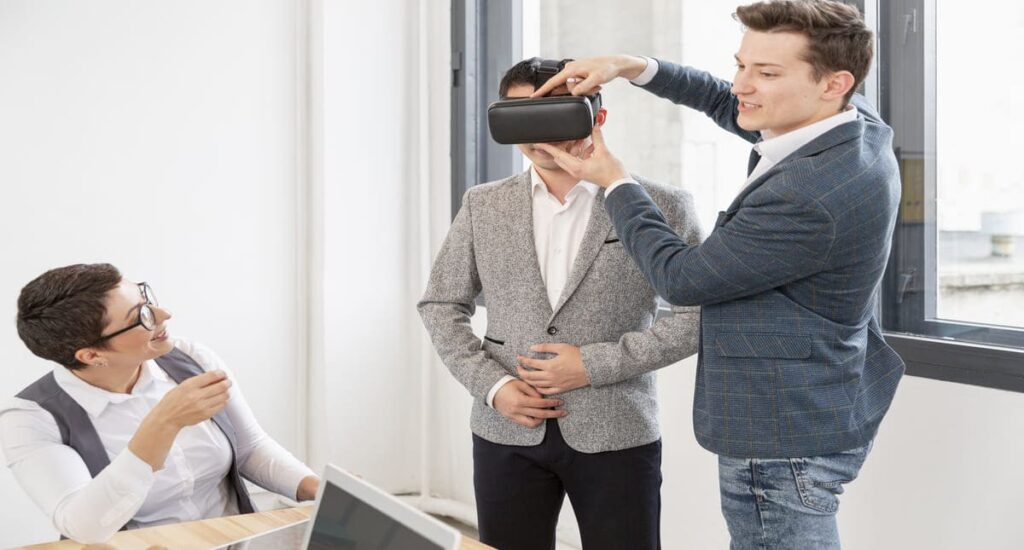
None of this means AI is the enemy. Gates isn’t warning people to hide from it; he’s suggesting we learn how to work with it. Designers will use AI technologies to generate concepts. Doctors will use AI to diagnose patients more quickly and accurately. AI systems may be used by educators to monitor student progress. But in each case, the technology is an assistant, not the star of the show. That’s the bigger lesson from the three careers to study to avoid being replaced by artificial intelligence, according to Bill Gates. As an alternative to the question, “How do I compete with machines?” “What can I do that machines cannot?” should be our question.
Conclusion: The Human Advantage

Gates’s message isn’t really about chasing the safest job titles—it’s about remembering what makes us different from the tools we build. A machine can process data and follow patterns, but it can’t comfort a patient, inspire a classroom, or create something that carries a piece of the soul. That’s where we come in. Creativity, compassion, the ability to move people—those are not side skills, they’re the heartbeat of being human. AI will keep moving fast, but our human strengths won’t disappear. They’ll matter even more. Whether you’re just starting out or figuring out what comes next, remember this: technology might build the future, but the meaning in it—that will always belong to us. Follow for more updates on Technology.

Hi, I’m Sikander Naveed — the mind behind this platform dedicated to online earning, technology, and smart business ideas. I created this site to share practical knowledge, latest trends, and real opportunities that can help you grow financially in the digital world. Whether you’re looking to start a side hustle, explore passive income methods, learn about useful tech tools, or understand how digital businesses work, you’re in the right place.