
Let’s be honest—2025 feels different. Not in a “flying cars” kind of way, but in a way that’s harder to pin down until you zoom out and see the patterns. The top 10 emerging technologies of 2025 that are reshaping the future aren’t just shaping some distant tomorrow. They’re already baked into the way Americans work, communicate, learn, and even relax. And unlike past decades, this wave of innovation isn’t rolling in one trend at a time—it’s crashing all at once. AI, biotech, clean energy, spatial computing… all accelerating together, feeding off each other, pushing boundaries. In my more than ten years of writing and advising in the IT industry, I can’t remember a time when the environment felt so fluid, so full of both promise and uncertainty. It’s thrilling—and, to be honest, a little overpowering if you’re not paying close attention.
Artificial Intelligence Is Learning to Think—and Explain Itself
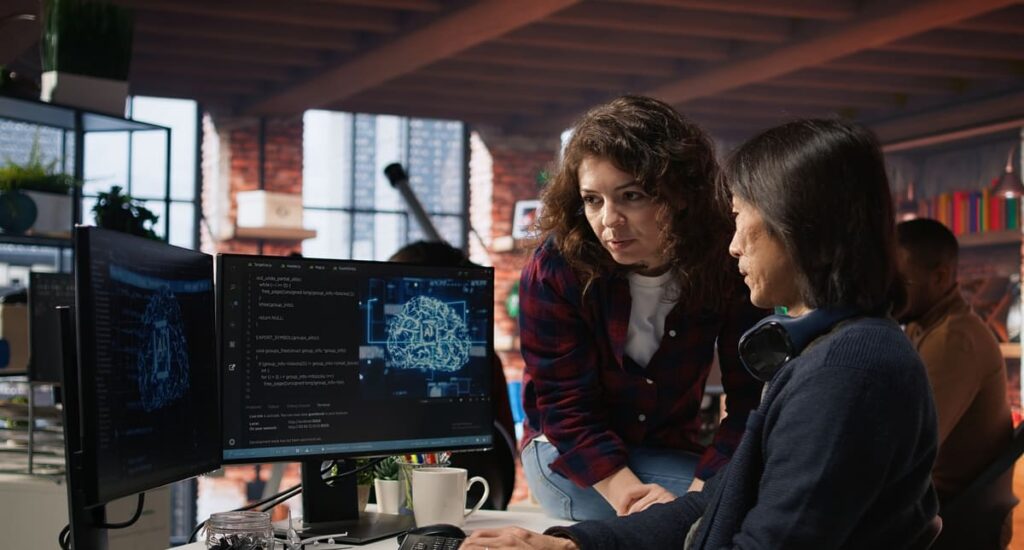
The first thing that stands out this year? AI isn’t just getting better—it’s getting weirder in a good way. I don’t mean that it’s become sentient (we’re not there, not really), but it’s doing things that used to require a human brain. And not just crunching numbers or sorting photos. I’m referring to making decisions, assessing trade-offs, and providing suggestions that seem thoughtful. Compared to where we were even two years ago, that is a significant improvement.
In the U.S., we’re seeing this play out across industries. A hospital in Chicago I spoke with is using AI to flag cancer markers long before radiologists would typically catch them. Meanwhile, fintech firms on the coasts are building systems that can detect subtle signs of fraud just by analyzing a user’s typing rhythm. And here’s the kicker: the best systems now explain their reasoning. That’s new. We used to have these “black box” models where even the engineers couldn’t say why a decision was made. Now, transparency is part of the design.
The cultural shift is just as interesting. For the first time in a while, the conversation isn’t just about how powerful the tech is—it’s about whether it aligns with our values. Companies are being asked to show their math, to build systems that are fair, accountable, and open to scrutiny. And while not every firm is getting it right, the pressure is real. AI can be helpful, yes, but in the wrong hands—or designed without guardrails—it becomes a liability. I’ve seen developers reworking entire systems just to reduce bias in training data. That’s hard, thankless work. But it’s necessary. The question now isn’t can we build it. It’s should we—and how?
Quantum Computing: The Theory Becomes Useful
For years, quantum computing felt like something physicists brought up at conferences to get funding. But 2025 is proving to be the year it finally starts earning its place in the real world. That doesn’t mean every startup suddenly has a quantum server in the back room—but it does mean the tech is starting to do things that classical machines can’t touch.
I’ve seen quantum applications in supply chain optimization, chemical modeling, and, most notably, cybersecurity. U.S. labs—both private and government-backed—are starting to get stable enough qubit performance that companies are doing actual R&D on quantum-ready algorithms. And with that comes a surge in hiring, training, and tooling. It’s early, but no longer theoretical. We’re finally seeing the beginnings of quantum-as-a-service models that let companies tap into this power without having to build the infrastructure themselves. We’re still a few steps away from widespread deployment, but I’ve spoken to CTOs at Fortune 100s who are allocating budgets for quantum projects now. That says something. When they start planning for it, you know it’s coming sooner than most people expect.
CRISPR Is Quietly Changing Everything
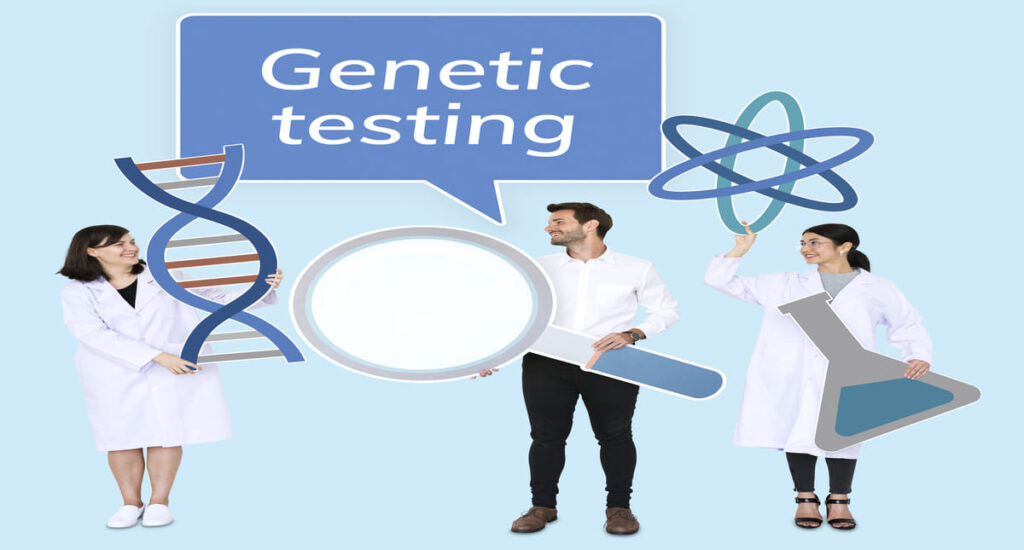
CRISPR isn’t grabbing headlines the way it used to, but don’t let the quiet fool you—it’s having a massive impact behind the scenes. In 2025, it’s being used in U.S. hospitals to treat genetic conditions that, not long ago, felt completely out of reach. I’ve talked to doctors working with patients who’ve lived their whole lives with disorders like sickle cell anemia or inherited blindness—and now, for the first time, they’re seeing real improvement. Some cases have been nothing short of astonishing.
CRISPR is unique because of its accuracy. This is more akin to using a scalpel rather than a hammer; we are not discussing extensive, dangerous treatments. Researchers may now enter, correct one defective gene, and leave the rest alone. Control like that leads to more focused outcomes and fewer adverse consequences. And it goes beyond medicine. Gene editing in agriculture is increasing crop resistance to pests, drought, and changing weather conditions. Farmers, particularly those in the west, are keeping a careful eye on this. With the way the climate’s behaving lately, tools like this could be game changers.
Of course, the ethical debates haven’t gone away, and they shouldn’t. Editing human DNA is a big deal. But in clinical settings, where the goal is to ease suffering and restore quality of life, the progress is very real. I’ve met researchers who used to think this kind of thing was decades off—and now they’re running trials. It’s not science fiction anymore. It’s just what’s happening.
The Battery Revolution Powers Real Energy Independence
For years, the energy conversation has hit a wall at the same point: storage. Solar and wind are great—but what happens when the sun isn’t shining or the wind stops? In 2025, we’re finally seeing battery tech catch up. The U.S. has been pushing hard into solid-state batteries, and the payoff is starting to show. We’re talking longer life spans, faster charging, and lower fire risk. Add to that the progress in green hydrogen and scalable grid storage, and you’ve got an energy system that’s far more flexible than it was even three years ago. Utilities across the country are beginning to deploy hybrid setups—solar, wind, and storage combined into one intelligent system. The grid is getting smarter. And households are starting to generate and store their own power at a meaningful scale. Energy independence used to be a talking point. Now, it’s becoming an option.
Brain-Computer Interfaces Aren’t Just Sci-Fi Anymore
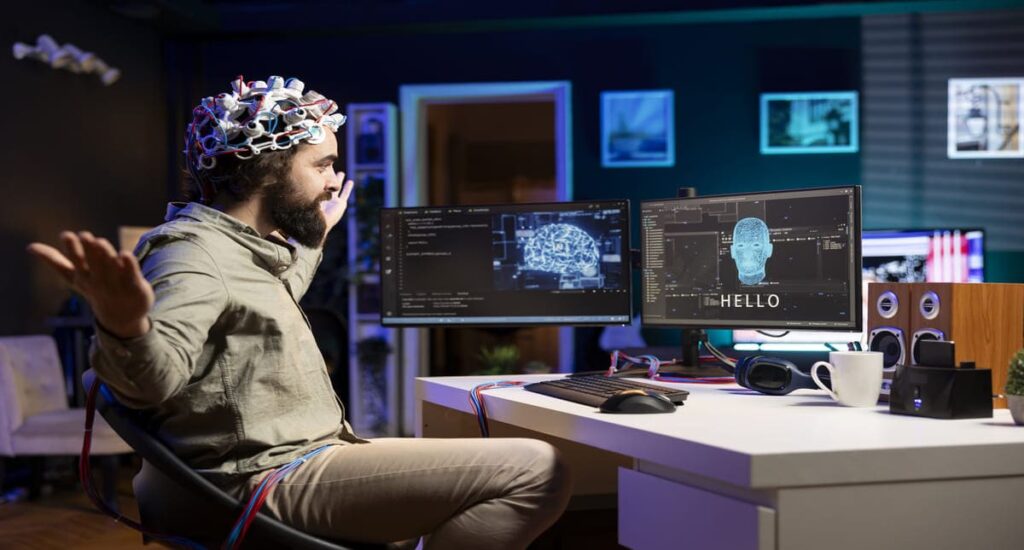
To be honest, I kind of wrote brain-computer interfaces off when I first heard about them. Amazing in idea, but probably confined to a lab for decades, it looked like something from a science fiction movie. It turns out that I was unaware of how quickly this technology would develop. By 2025, BCIs are starting to transform people’s lives and are no longer merely an experimental technology.
The progress is a little crazy. Researchers in the United States have demonstrated to me that individuals who are paralyzed may move a cursor on a screen or even type by only thinking. Additionally, it’s smooth, intuitive, and truly transformative for users—it’s neither clumsy nor awkward. Some of the programs are also addressing issues beyond mobility, such as memory loss, anxiety, or stroke speech recovery. Not only are the accounts from these trials remarkable, but they are also poignant. You realize that this is no longer science fiction when you see someone re-establish a connection with their surroundings after feeling cut off from it for years. This is true. And that’s only the start.
Robotics Get Collaborative—and a Lot More Useful
The robots of 2025 aren’t humanoid waiters or sci-fi droids. They’re more like ultra-efficient coworkers. Collaborative robots—or “cobots”—are now working side by side with people in warehouses, factories, and even hospitals across the U.S. These aren’t rigid, pre-programmed arms. They’re adaptive. They use computer vision and machine learning to respond to human movement and environmental changes in real time. I visited a logistics center in Ohio last month where cobots were sorting and delivering inventory faster than any traditional system they’d used before—and with fewer accidents. What excites me most is that this isn’t limited to big corporations. As costs drop and usability improves, even smaller American businesses are starting to integrate robotics. And when the tech just works in the background, that’s when you know it’s arrived.
The Metaverse Finds Its Purpose

Remember when the metaverse was just a marketing buzzword? Yeah, me too. But in 2025, it’s finally finding its footing—not as a digital escape, but as a useful tool for training, design, and collaboration. American companies are using spatial computing platforms to simulate everything from medical procedures to complex construction layouts. I’ve seen schools using it to teach anatomy in full 3D, giving students a hands-on feel from their own homes. The graphics are better, sure, but it’s the interaction that matters now. We’re past the gimmicks. The focus is on function, not fantasy. Honestly, it’s better that way.
Blockchain Quietly Becomes the New Backbone
The hype around crypto may have faded, but blockchain itself has never been more active. In 2025, it’s showing up where it matters: in backend systems. American banks are now using distributed ledgers to speed up transactions and reduce fraud. Supply chain companies use tamper-proof records to monitor products from point of origin to the shelf. Smart contracts are handling insurance payouts automatically, based on verified data.You won’t see it on the front page anymore—but that’s kind of the point. It’s becoming invisible infrastructure. And that’s exactly where it belongs.
6G and the Rise of Real-Time Everything

If 5G was about speed, 6G is about synchronization. Pilot programs that provide ultra-low-latency connections throughout entire cities are already underway in the United States. This implies that devices can react nearly before you finish your instruction, smart grids can balance loads immediately, and autonomous cars can coordinate in real time. The reach is expanding, too. Low-orbit satellites are helping connect rural communities in ways fiber never could. In places where connectivity used to be a barrier, 6G is removing friction entirely. It’s not perfect yet. But it’s getting close. The foundation it’s laying? That’s what future tech will be built on.
Climate Tech Isn’t Optional Anymore
The U.S. is facing increasingly unpredictable weather, and 2025 has made one thing clear: waiting is no longer a strategy. Climate tech is no longer a niche—it’s a necessity. From carbon capture systems being piloted in the Midwest to AI-driven forest monitoring in the Pacific Northwest, we’re seeing real tools hit the ground. I’ve spoken with founders working on materials that absorb CO₂ and convert it into construction-grade concrete. It’s wild—and it’s working. The politics around climate are still messy. But the technology? It’s moving fast, and it’s giving communities tools to act now, not later.
Conclusion
We may not be aware of it, but the top 10 coming technologies of 2025 are already influencing American culture and daily life. The way we communicate, how we work, and how sectors like healthcare and finance function are all being altered by these developments. It is a question now of when and not if they will touch your life. The solution will come sooner than you would think. It’s no longer even an option to stand on the sidelines. The future is moving quickly and making itself known in tangible, real terms. The real question then is, are you hearing and are you ready to make changes before it gets the best of you? Follow for more updates on Tech Education.

Hi, I’m Sikander Naveed — the mind behind this platform dedicated to online earning, technology, and smart business ideas. I created this site to share practical knowledge, latest trends, and real opportunities that can help you grow financially in the digital world. Whether you’re looking to start a side hustle, explore passive income methods, learn about useful tech tools, or understand how digital businesses work, you’re in the right place.